CLIF has been a staple among Oryana shoppers for years. Now offering a range of bars beyond the flagship CLIF bar, the brand offers a delicious, energy-packed catalog of bars to suit a diverse range of dietary needs. CLIF and Luna bars are handy, portable snacks crafted with sustainability in mind.
To help our shoppers learn more about our products, we’ve put together a summary of CLIF bars’ history, ownership, and product traits to help our shoppers make informed, confident buying decisions.
What Are CLIF Bars?
CLIF bars are known for being soft, chewy, and easy to digest for snacking on the go. They are primarily made with plant-based ingredients to provide sustained energy and satiety. CLIF was born on a bike ride in 1991, when founder Gary Erickson vowed never to eat another traditional energy bar. After six months, Gary had a recipe; after two years, he had a product on store shelves.
CLIF Bar Nutrition
There are six CLIF products with dozens of flavors within each product collection, which means CLIF’s nutrition information varies considerably by the type of bar.
The standard CLIF bar has roughly 250-300 calories and a high carbohydrate content, often 40-44 grams per bar. Most bars also include 9-11 grams of plant-based protein and 5-6 grams of fiber.
It’s important to note that at least some of that carbohydrate count is from sugar, with most bars packing in 17-21 grams.
Other bars, such as the CLIF Bar protein bar, dubbed “Builders”, have 20 grams of protein.
Are CLIF Bars Gluten-free?
No, most CLIF bars aren’t gluten-free, though they don’t intentionally use wheat. The oats used in CLIF bars, plus the barley malt also used in most bars, are processed in facilities that may cause cross-contamination.
CLIF Builders are specifically manufactured to be gluten-free, as are CLIF Kid Zbar Protein (but not the non-protein version).
Are CLIF Bars Vegan?
The company does not claim its products are vegan, even though they do not contain animal ingredients. CLIF says it does not claim them as vegan because there is a small risk of cross-contact with dairy during manufacturing. Some bars are not vegan, including those that use real honey, such as the sweet-and-salty peanut butter and honey with sea salt.
Who Owns CLIF?
CLIF was acquired by Mondelez International, Inc. in 2022 for $2.9 billion. Despite the acquisition, CLIF is still headquartered in its hometown of Emeryville, California. All CLIF bars are still made in the USA, with manufacturing facilities in Twin Falls, Idaho, and Indianapolis, Indiana.
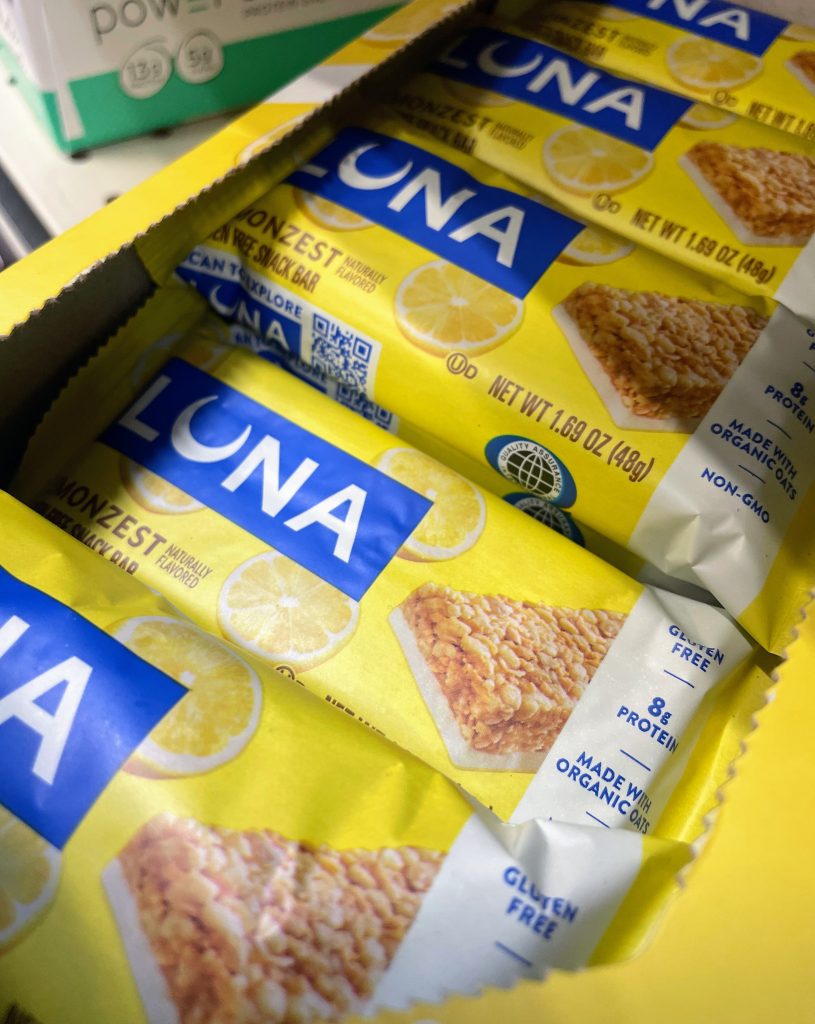
Luna Bar, The Gluten-Free Option
While traditionally marketed to women, the Luna bar’s key differentiators go beyond different labeling.
Luna bars are designed to have fewer calories, roughly the same amount of protein, and less sugar. Importantly, all Luna bars are certified gluten-free and fortified with nutrients like calcium and folic acid.
Always check your favorite Luna bar’s nutrition label to ensure the ingredients align with your dietary needs and priorities.
Are Luna Bars Vegan?
Like CLIF bars, Luna bars do not intentionally include animal products, though the brand doesn’t label them as vegan because they are made with equipment that processes other foods that may contain dairy.
Higher Standards, A Bigger Mission
CLIF and Luna both meet Oryana’s buying and product guidelines, which account for food quality, sustainability, and social responsibility. While not local, CLIF otherwise meets the requirements for certification, transparency, and safety.
Our goal is to constantly assess and elevate our offerings to meet the needs of our discerning shoppers. If you have questions, contact customer service, and subscribe to our newsletter for details on our product standards, local events, and more!