From Rosemary Gladstar
Cough, cold, and flu season can be especially draining in northern Michigan’s long winters. For many residents, home remedies offer an effective, comforting alternative to pharmaceuticals, especially for milder symptoms. There is something warming for the heart, mind, and throat when we turn to herbal therapies, and fire cider is a perfect example. Learn how to make fire cider, a traditional herbal tonic, and how it may help stave off cold and flu symptoms.
What Is Fire Cider?
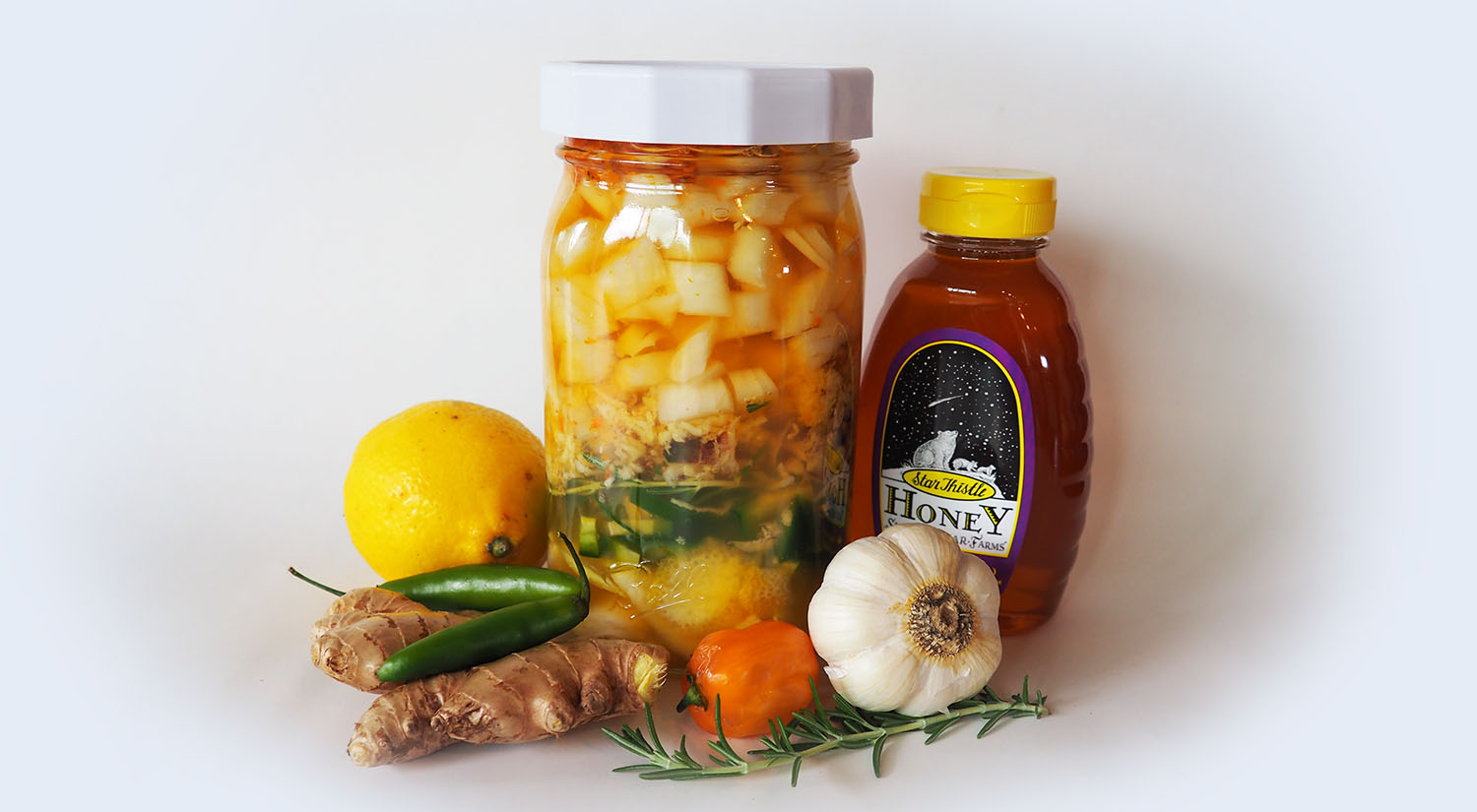
Fire cider is a time-honored and popular tonic folk remedy for colds and coughs. Basically, it is vinegar infused with superfoods and antioxidant-rich ingredients. It’s a fiery concoction that may help with sinus congestion and digestion, increase circulation, and be an all-around immune-boosting friend. Feel free to vary the flavoring ingredients and make it your own. For example, add a cinnamon stick, a few cloves, a chopped fresh beet for color, some cranberries, hibiscus flowers, a fresh orange, etc. You can use any kind of fresh hot pepper you want to suit your heat tolerance.
How to Make Fire Cider
Take 1-2 tablespoons at the first sign of a cold and repeat the dose every 3-4 hours. You can take it straight, but if that’s too harsh, mix it with tea, water, broth or other liquids and sip. You can also enjoy it as salad dressing, on rice, or with steamed vegetables.
Fire Cider Ingredients:
- 1/2 cup fresh grated ginger
- 1/2 cup fresh-grated horseradish
- 1 medium onion, chopped
- 10 cloves of garlic, crushed
- 2 jalapeño peppers, chopped
- 1 lemon, zest cut off in strips, juiced
- 2 tablespoons rosemary, dried, or several sprigs of fresh rosemary
- 2 tablespoons fresh turmeric, chopped, or 1 tablespoon ground turmeric
- Unpasteurized (raw) apple cider vinegar
- 1/4 cup honey, or to taste
Instructions:
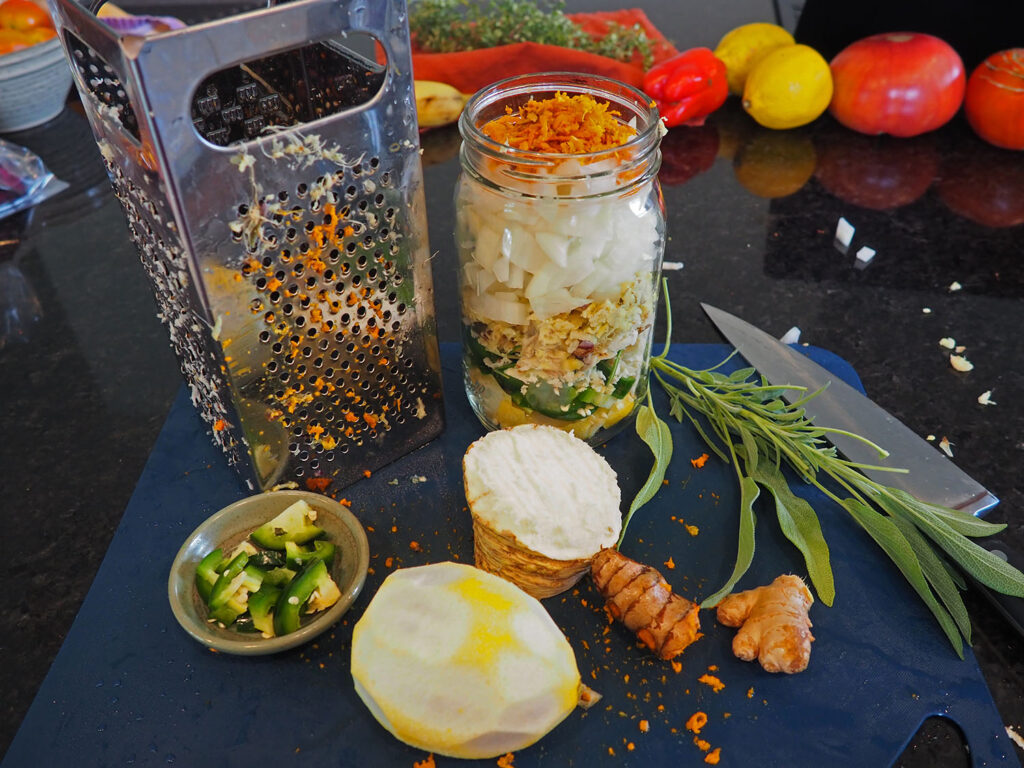
- Place ginger, horseradish, onion, garlic, peppers, lemon zest strips, lemon juice, rosemary and turmeric in a quart canning jar. Fill jar with apple cider vinegar. If using a metal lid, use a piece of parchment paper or wax paper under the lid to keep the vinegar from touching the metal (or use a plastic lid.) Shake well. Store in a dark, cool place for one month; don’t forget to shake daily.
- Use cheesecloth to strain out the pulp; pour the infused vinegar into a clean jar. Be sure to squeeze as much of the liquid goodness as you can from the pulp while straining. Add 1/4 cup of honey to infused vinegar and stir until incorporated. Taste and if desired, add more honey until you reach the level of sweetness you like. Fire cider should taste hot, spicy, and sweet. Label and date the jar before storing. Try to use it within 1 year and then make a fresh batch next year. It will keep longer than 1 year but may lose some of its potency.
How Much Fire Cider to Take Daily
To reduce the risk of colds or flu, take 1-2 teaspoons of fire cider daily. If you’re already feeling under the weather, try 3-4 teaspoons per day, spaced throughout the day. Fire cider dosages should be relatively low; the acidity and spice may cause minor dietary discomfort, especially if you take too much at once. If you have a sensitive stomach, dilute the mixture to reduce the risk of any issues.
Does Fire Cider Actually Work?
It’s about the charm and symptom relief, not necessarily a cure. The spices and “heat” in traditional fire cider recipes usually cause your nose to run, which may temporarily clear out your sinuses and any nasal congestion. It’s important to note that there is no scientific evidence that fire cider cures or shortens colds, flu, or other viral illnesses. Experts do maintain that the individual ingredients in fire cider are beneficial, and many have antioxidants that soothe symptoms. If you enjoy the flavor and the short-term relief, and the acidity doesn’t upset your stomach, there’s no reason not to enjoy this charming, comforting remedy.
Keep Cookin’ with Oryana
We love helping at-home chefs get creative. With fresh, sustainable produce, local products, and a friendly, helpful staff, you can always rely on Oryana for quality options and creative recipes! Subscribe to our newsletter for weekly recipe ideas and check out our calendar of classes to discover new dishes.