Food waste is a problem at every step in the supply chain. The most recent food waste statistics show that growers, retailers, and consumers all contribute to the problem – and it’s a big problem. One-third of the world’s food supply is wasted each year, enough to make it the third-largest source of greenhouse gas emissions if measured against actual countries.
Learn how to reduce food waste at home, what retailers like Oryana are doing, and how local surplus food rescue programs address both waste and hunger in the community.
What Is Food Waste?
Food waste is defined as throwing away edible foods at the retail and consumer levels. Think of spoiled groceries or a perfectly good meal that goes uneaten in your favorite restaurant.
There are other forms of food waste that occur further up the value chain. Technically, food loss is a separate term referring to food wasted or lost during production or manufacturing. Excess food is a form of food loss, but it’s unsold or unused food that is still safe to eat – this is the product typically picked up by food rescue programs for distribution to local food banks or pantries.
Food Waste in America, By-the-Numbers
Americans waste 30%-40% of their food supply annually, and the volume of that waste is truly astounding. We waste 66 tons of perfectly edible food per second and over 103 million tons per year.
Food waste has a real impact on Americans financially and ecologically.
- A household of four wastes $2,913 worth of food annually, or roughly $728 per person.
- 28% of the world’s arable land is used to produce food that won’t be eaten by humans or for agricultural purposes.
- Food loss generates between 8% and 10% of all greenhouse gas emissions.
The Weakest Links in the Food Supply Chain
It’s important to stress that food waste is an issue at every step of the value chain, but consumers are the worst offenders.
- 43% of food waste occurs in homes
- Another 40% occurs in restaurants and grocery stores
- 16% happens on the farm
- 2% of food waste occurs during manufacturing
How to Reduce Food Waste at Home
Food waste is one of the most pressing environmental and economic challenges of our time; it’s a huge problem, but it’s not so intimidating when you view it at the household level.
Every single one of us is more than capable of reducing food waste by:
- Check your fridge or pantry before you go shopping to avoid overstocking items that may spoil
- Move older perishable foods to the front of the fridge to use them first
- Planning meals before you shop to purchase only the food you plan to use
- Preparing just enough food and avoiding leftovers
- If you have leftovers, prioritize eating them before preparing more food
- Freeze extra portions of food when possible
The EPA has a useful tool to measure and track emissions from wasted food, helping families understand their impact.
The Food Waste Problem Solvers
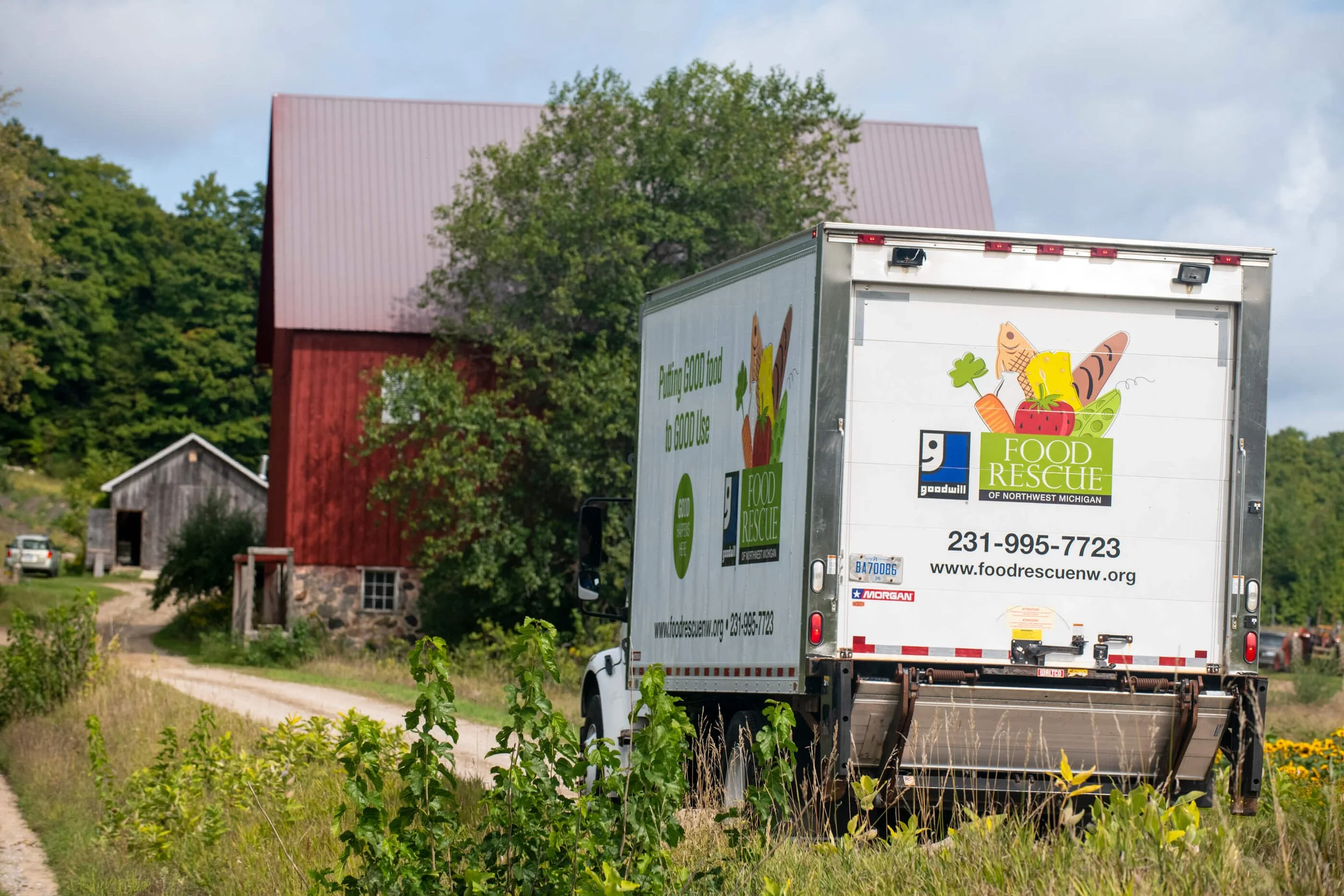
Food rescue programs like Food Rescue of Northwest Michigan are the perfect example of organizations addressing waste at the commercial level. In collaboration with Northwest Food Coalition, the group works with dozens of area grocers, restaurants, and growers to rescue, repack, and distribute more than 2 million pounds of food annually.
That’s $3.34 million worth of food saved and redistributed to 70 food pantries in Traverse City, plus community meal sites across the area.
Their work is about more than fighting waste. The program helps the 36% of regional households struggling with access to quality food.
How Does Goodwill’s Food Rescue Program Work?
The program is both incredibly simple and intricately complex. The group picks up excess and soon-to-expire food at over 210 businesses and brings it to the organization’s food hub. There, it’s repacked for distribution to over 70 pantries the same day at no cost.
Volunteers also pick up fruits and vegetables from local farms, with these fresh foods representing approximately 42% of the distributed food.
Oryana Community Co-op is proud to be part of the Food Rescue Program and a supporter of the Northwest Food Coalition.
Food Security Matters at Oryana
Oryana Community Co-op is committed to providing accessible, nutritious foods to everyone in Northern Michigan. We are proud to be part of food rescue programs and to instill a culture of reverence for food, makers, and those we support. Become an Oryana owner and stay connected by subscribing to our newsletter.