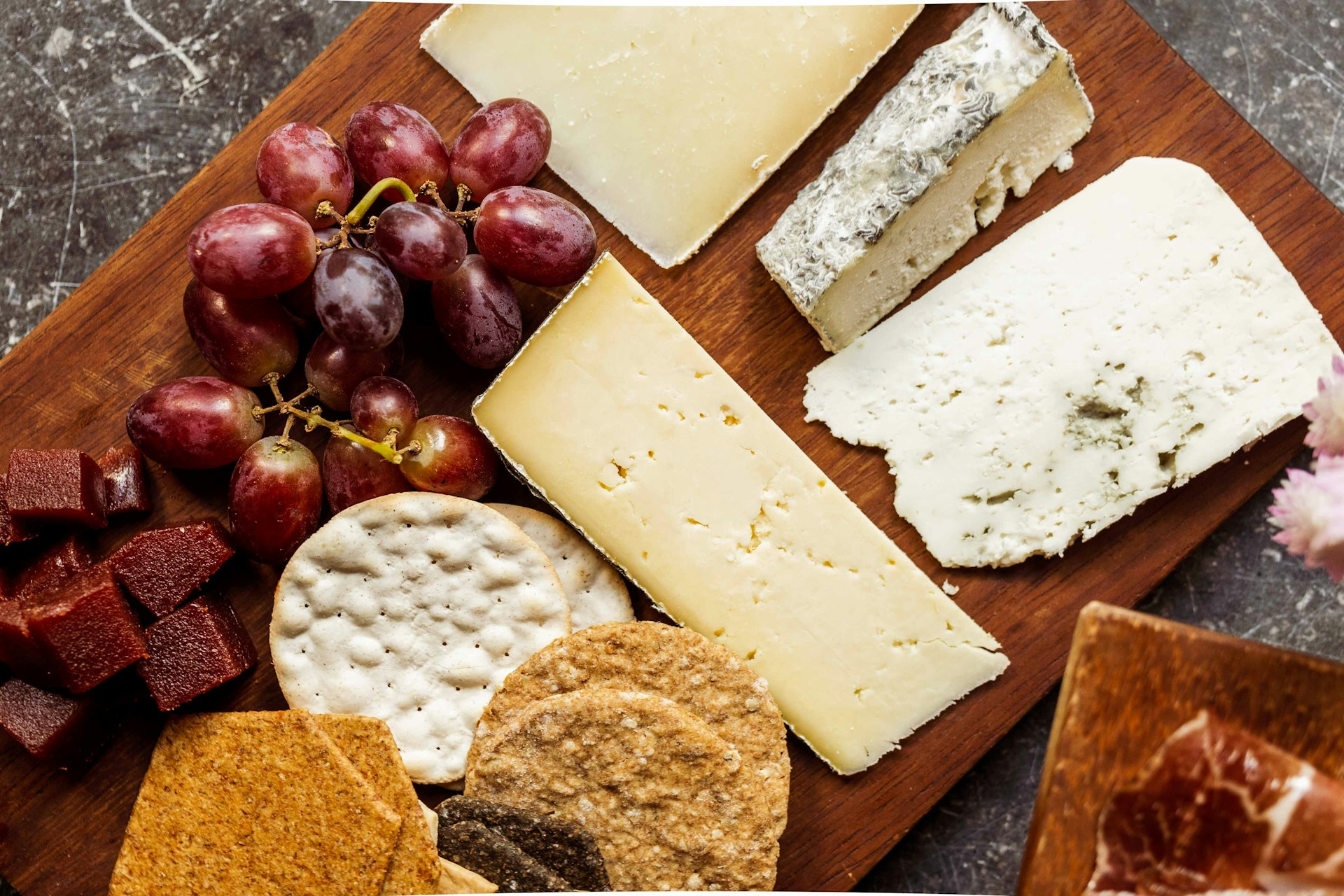
Cheese has been a staple of diets in most parts of the world for centuries. Over time, regional creativity and climates have led to hundreds of different types of cheeses, each with a unique history and precise cheesemaking process. From prestigious European cheeses to local cheese brands based right here in Northern Michigan, our cheese guide offers an overview of the most popular types of cheese and what sets each apart.
A Brief History of Cheese
Cheese production, like so many culinary inventions, may have been an accident. According to folklore, an Arabian merchant attempted to store milk in a sheep’s stomach for a trek across the desert. The heat and composition of the pouch caused the milk to separate into curd and whey. He ate the curd that night and loved it; the rest isn’t quite history, but it’s a great story.
Actual cheesemaking likely began in Asia before being popularized in Europe. Cheese was a staple of trade and nutrition from 4,000 BCE, moving from Greece to Italy throughout the first and second centuries.
Cheese is more stable, and therefore more portable, than milk, a crucial component of Rome’s continental trade system.
Popular Varieties of Cheeses to Know
Cheddar. Mozzarella. Parmesan. These common types of cheeses are just the tip of the cheese wedge, and there are dozens of other options to delight the palate and pair with your favorite dishes. There are so many cheeses that it’s often beneficial to start with the two main categories.
Hard Cheeses vs. Soft Cheeses
In addition to cheese colors, texture and moisture content are critical components of selecting – and enjoying – cheese with your favorite dishes. The difference between soft and hard cheeses is primarily down to moisture content.
Soft cheeses have a 50-80% moisture content, which makes them spreadable and creamy but also more prone to spoilage. Soft cheeses aren’t aged for long, if at all.
Some examples of soft cheeses include: Brie, Camembert, mozzarella, ricotta, chevre, and feta.
Hard cheeses’ lower moisture content results from a much longer aging process, leading to a more crumbly texture and stronger flavor profiles.
Popular hard cheeses include Pecorino, Swiss, Parmigiano-Reggiano, and aged cheddar.
Cheese, Lactose, and Sugar
Another difference between hard and soft cheese is lactose and milk sugar content. Soft cheeses tend to have more lactose and generally have higher levels of milk sugar, both of which are usually lost during the aging process. As a result, hard cheeses tend to align with low-carb or lactose-intolerant dietary needs.
The Most Consumed Cheeses in the World
There are plenty of incredible cheesemakers in northern Michigan and around the world, creating unique, exciting flavors. Here in the US, cheese consumption has more than doubled since 1981 to 0.74 cup-equivalents per person daily. That equates to roughly 54 pounds of cheese annually!
The most popular cheeses in the US reflect global trends as well; here’s which cheeses we can’t get enough of!
Cheddar: This classic cheese accounts for over 20% of all retail sales in the US and is America’s favorite cheese. It’s a staple for sandwiches, snacking cheeses, and charcuterie boards. Cheddar has a wide variety of taste profiles, including regional flavors shaped by practices in Wisconsin, Vermont, and England.
The variation in cheddar cheese results from aging and different practices.
- Mild cheddar: Aged 1-3 months
- Medium: Aged 3-6 months
- Sharp: Aged 9-12 months
- Extra sharp: Aged 1-2 years
Cheddar cheese pairs well with crisp, tart fruits (apples, plums, pineapples), a crisp Sauvignon Blanc (if you like white wine) and just about any red wine.
Mozzarella: The best-selling cheese by total volume worldwide, but with an asterisk. Mozzarella’s primacy comes from its prominent place on pizza, where its melty, gooey goodness really shines. It’s also the most popular snackable cheese (usually in stick form) and a wonderful option for many culinary dishes.
Mozzarella cheese pairs well with tomatoes, sweet peppers, crusty bread, and most light white wines; we love a Pinot Grigio!
Parmesan: The third-best-selling cheese in the world, Parmesan is also the top growth driver in the industry. Its growth aligns with a gradual decline in American cheese sales, driven by an increase in consumers cooking at home while trying to replicate their favorite restaurant recipes.
It’s important to note that only products bearing the Parmigiano-Reggiano label are truly Parmesan cheese. These come from the Parma region in Italy and follow traditional cheesemaking methods, such as being aged for at least one year and using raw milk, salt, and natural enzymes.
The term “Parmesan” technically describes any cheese that loosely follows Parma’s methods – and “loosely” is doing a lot of lifting. Lower-quality options may contain additives and fillers, including cellulose, and are often aged for shorter periods.
Parmesan cheese pairs well with sweet fruits, nuts, and cured meats. Of course, it’s delightful over pasta or roasted vegetables as well!
Gouda: Gouda is increasingly popular in the US and continues to earn space in cheese counters at Oryana and other specialty retailers. Most Gouda products are imported from the Netherlands, though domestic production is accelerating rapidly in Wisconsin, Michigan, and other dairy states.
Smoked Gouda and the cheese’s naturally low lactose levels are the key drivers of its growing popularity.
Gouda pairs well with apples, breads, crackers, and savory meats and nuts. We love it with a bold Cabernet Sauvignon as well!
How Many Types of Cheese Are There?
There are 1,800 to 2,000 types of cheese, and we’ve only touched on a few. In addition to texture, there are categories of cheese colors (white, yellow, and blue), and dozens of variations among cheese types across manufacturers. The origin of certain cheeses, such as Parmigiano-Reggiano, is the subject of intense legal protection. Cheesemakers, regional governments, and international trade organizations aggressively protect the brand and use of cheese names to protect consumers from lower-quality imitation. Part of the proliferation of cheeses is the result of this on-going fight to protect processes and products that are deeply treasured by their communities.
Trust Oryana’s In-House Cheese Whiz
Oryana Community Co-op is Traverse City’s go-to cheese destination. Our dedicated Cheese Islands at each store offer dozens of cheeses from international, domestic, and local cheesemakers, all carefully selected based on quality, sustainability, and social impact. Stop in either location for expert recommendations that elevate your meals, and subscribe to our newsletter for delicious, accessible recipes every week!