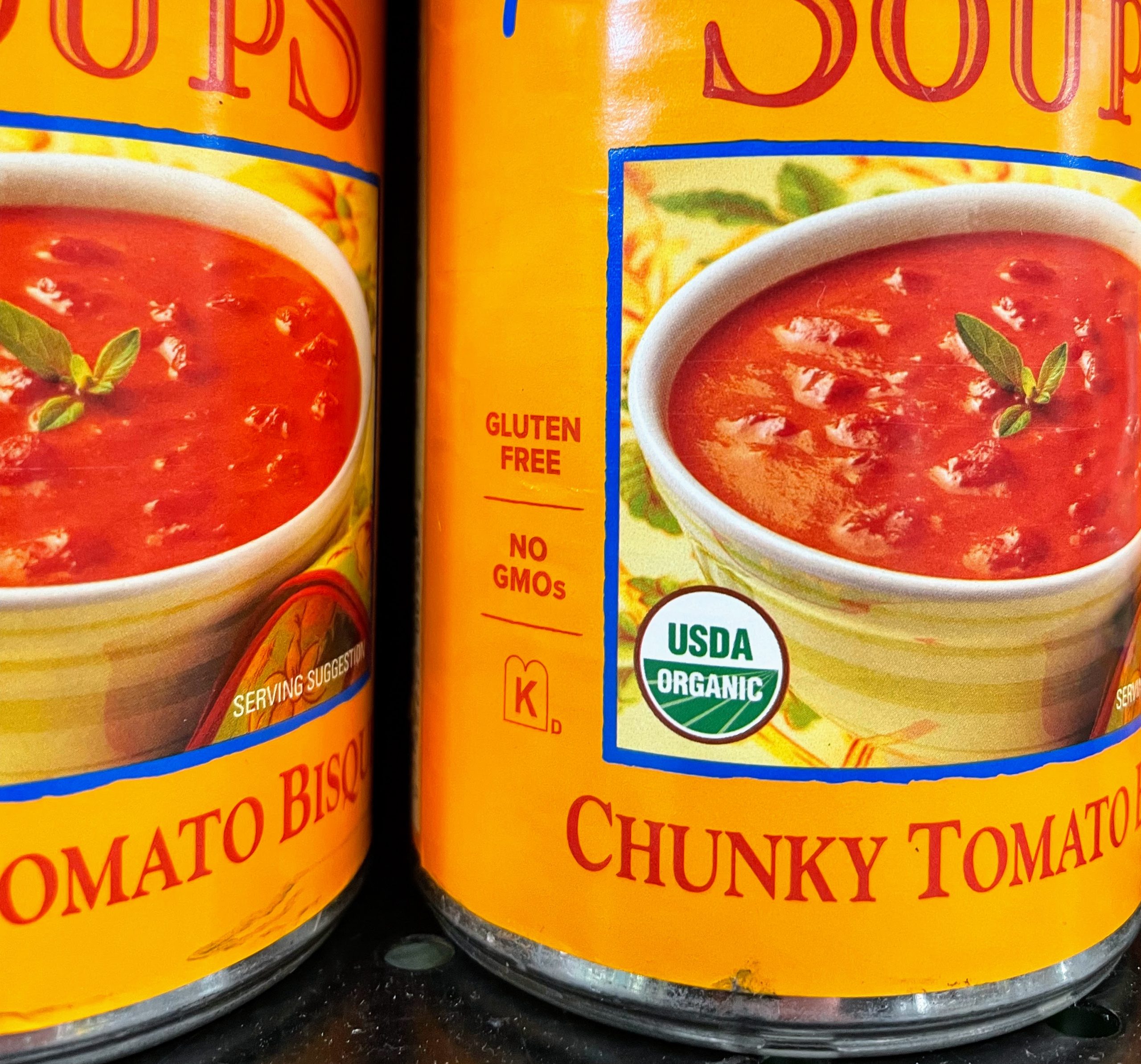
Today’s food labels carry many unregulated, undefined marketing terms that mean little. Terms like “natural,” “clean”, and “healthy” may sound promising, but lack any certification or meaning. USDA organic is the only government labeling standard that verifies agricultural products are actually organic.
Find out why you can trust products bearing the USDA organic label, what organic means on food products to begin with, and why new labels like regenerative organic are gaining momentum.
What Does Organic Mean on Food Labels?
Products with an organic label indicate that any agricultural ingredients were produced without synthetic substances (think petroleum-based fertilizers for plants or synthetic hormones in animals) and do not contain artificial preservatives, colors, or flavors.
USDA Organic Certification
The US Department of Agriculture requires rigorous inspections and very strict standards before products can use its USDA organic label.
Organic produce must:
- Not be grown on land that has been exposed to synthetic fertilizers, pesticides, or other banned substances for at least three years
- Not use conventional seeds
- Not use genetically engineered seeds, ionized radiation, or sewage sludge
- Not use synthetic fertilizers or pesticides
Organic livestock and poultry must:
- Use organic feedstock
- Have access to the outdoors year-round and may only be confined indoors due to environmental or health issues
- Receive at least 30% of their feed from grazing, and must be allowed to graze at least 120 days
Handling standards are also regulated, with careful consideration to avoid mixing organic and non-organic products and to account for labeling claims.
There are also more specific regulations pertaining to specific commodities, from beef to wool.
Organic Food Label Classifications
Organic labels are divided into four tiers based on the share of organic ingredients in the products.
- 100% organic means the product is entirely organic, and these products can use the USDA label
- Organic means 85% of the product’s ingredients are organic. The remaining 5% must be ingredients from the USDA’s National list.
- Made with organic ingredients means at least 70% of input components are organic, but it cannot use the USDA organic label.
- If products contain less than 70% organic ingredients, they cannot use the word “organic” on the front of the packaging but can note organic ingredients in the ingredients list.
Are Organic Foods Safer or More Nutritious?
We get this question a lot: are organic foods actually better for you? The primary benefit of organic food is the reduced exposure to pesticides and heavy metals. Studies show that individuals who eat organic have a lower risk of non-Hodgkin lymphoma, among other health conditions. Aside from this risk, organic and conventional produce are comparable to nutrient content.
Organic vs. Conventional Food
Getting the recommended amount of fruits and vegetables per day is more important than choosing between conventional and organic foods. All foods sold in the US must meet the same safety standards, so it’s important to recognize that eating fresh produce and limited ultra-processed foods makes a bigger difference than debating organic versus conventional.
Are organic foods more nutritious?
The level of nutrients in produce depends on many factors, including soil quality, harvest time, storage, and other variables. There is often a wider range of nutrient availability between farming regions than between organic or non-organic products grown in the same area.
That said, some studies show organic produce often contains higher levels of vitamin C, iron, and magnesium.
Generally, organic foods aren’t considered more nutrient-rich than conventional options. Importantly, organic doesn’t mean local; always check with your co-op to look for local organic options, when available.
Read More: The Non-GMO Certification Process
The Rise of Regenerative Organic Certified Products
Recently, a non-governmental, third-party organization called the Regenerative Organic Alliance developed a new certification. The Regenerative Organic Certified label includes all of the USDA Organic standards, plus mandates to rebuild ecosystems. The core tenets of ROC certification are:
Soil health: Requires cover cropping, crop rotation, and no-till farming to sequester carbon and build organic matter.
Animal welfare: Requires pasture-based feeding, open living conditions, and no confined feeding.
Social fairness: Requires living wages, safe working conditions, and fair contracts for farmers and farm workers.
Regenerative Organic Certified Products are available in three tiers (bronze, silver, and gold), and the certification level is included in on-package marketing. It’s important to note that ROC is not a government entity and is funded by donations, grants, and corporate contributions.
Why Choose Organic Foods
Organic foods reduce the risk of synthetic fertilizers and pesticides, as well as GMOs. There are other benefits to eating organic foods, too, including supporting sustainable, ecologically friendly farming practices.
Choosing organic also protects farm workers from being exposed to hazardous chemicals. Research shows that nearly all farm workers in the US are exposed to agrochemicals, and between 10,000 and 35,000 suffer from acute pesticide poisoning per year.
The choice to buy organic foods also reduces the spread of chemicals in waterways and underground water tables, protecting nearby rivers and lakes.
Shop USDA-certified Foods at Oryana Co-op
Interested in shopping organic? Your local food cooperative is an invaluable resource for discovering organic food alternatives, including locally produced options from nearby farms. Oryana works offer a mix of organic and conventional products to help families find the best foods for their lifestyles and needs.
Shop our Tenth Street and West locations, and sign up for our newsletter for more information on food certifications to guide your shopping habits.